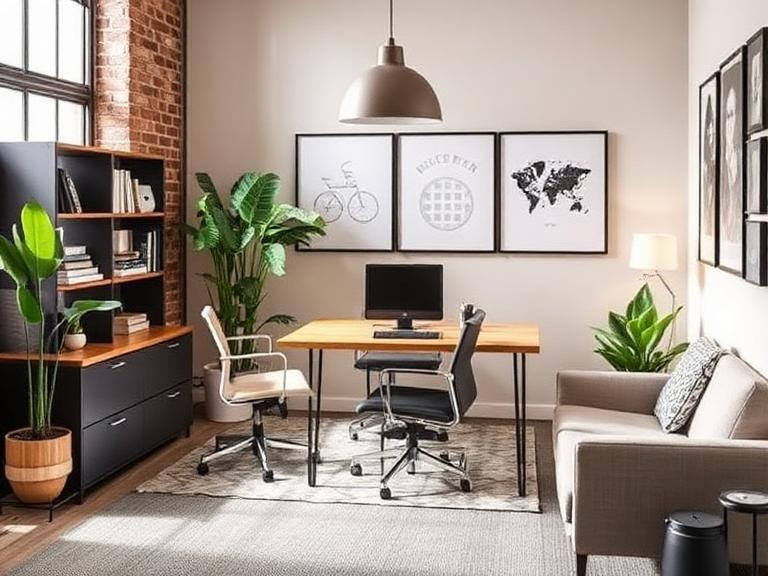
Mastering the Corner The Ultimate Guide to Optimizing Small Office Spaces
The shift towards remote and hybrid work models has forced millions of professionals to rethink their working environments. Not everyone has the luxury of a dedicated room for a home office. For many, the workspace is carved out of a bedroom, a living room, or a small apartment nook. In corporate settings, high real estate costs are shrinking the square footage allocated per employee.
This reality has given rise to a hot topic in interior design: space optimization. How do you maintain high productivity and ergonomic standards when square footage is limited? The answer lies in intelligent layout planning and utilizing the most underappreciated area of any room—the corner.
The “Dead Space” Dilemma
In traditional room layouts, corners are often “dead space.” We tend to center furniture against flat walls, leaving the corners empty or filled with clutter like dustbins or cable nests. In a small room, wasting this space is a critical error.
By pivoting the focus to the corner, you effectively open up the center of the room. This creates a sense of airiness and flow, making a small room feel significantly larger. It also improves traffic flow, as you are no longer obstructing walkways with bulky furniture jutting out from the center of a wall.
The Ergonomic Advantage of L-Shaped Configurations
One of the most efficient ways to utilize this space is through an L-shaped setup. This configuration is not just a space-saver; it is an ergonomic powerhouse.
An L-shaped configuration creates a “cockpit” effect. The user sits in the center, with easy access to two distinct work surfaces.
- The Primary Zone: This is where the computer monitor and keyboard sit. It is used for focused, digital work.
- The Secondary Zone: The return side of the desk offers space for paperwork, writing, or additional devices like printers and scanners.
This setup minimizes the need to reach or roll your chair across the room. Everything is within an arm’s length radius, reducing strain on the back and shoulders. It promotes a more organized workflow, allowing you to separate “digital” tasks from “analog” tasks physically.
Choosing the Right Equipment for Small Spaces
When selecting furniture for a compact office, measurement and scale are vital. A heavy, mahogany executive desk will overwhelm a small room. Instead, look for clean lines, open frames (like metal legs), and lighter colors which reflect light and make the unit appear less bulky.
The anchor of this setup is, of course, the desk itself. A high-quality corner desk is specifically engineered to fit snugly into 90-degree angles, maximizing the usable surface area without encroaching on the room’s footprint. These desks often come with integrated cable management systems, which is crucial in small spaces where clutter is more visible and distracting.
Vertical Storage Solutions
Once you have optimized the floor plan with a corner configuration, the next step is to look up. Vertical storage is the secret weapon of small office design. Installing floating shelves above the desk draws the eye upward, creating an illusion of height.
Tall bookcases or shelving units placed adjacent to the desk can act as an extension of your workspace. By keeping files, books, and stationery off the desk surface and on shelves, you maintain a clean mental slate. A cluttered desk often leads to a cluttered mind, so vertical organization is as much about psychology as it is about storage.
Lighting the Corner
One challenge with corner setups is lighting. Corners are naturally the darkest parts of a room, furthest from the central ceiling light. To combat this, layer your lighting.
- Task Lighting: A high-quality LED desk lamp with adjustable brightness is non-negotiable to prevent eye strain.
- Ambient Lighting: Consider LED strip lighting behind the monitor or under shelves to add warmth and reduce contrast glare.
- Natural Light: If possible, position the desk near a window. However, try to have the window to your side rather than directly behind or in front of you to minimize screen glare.
Conclusion
Small spaces do not have to mean small ambitions. With the right approach to layout and the correct furniture choices, a compact corner can be transformed into a powerhouse of productivity. By embracing the corner and utilizing L-shaped designs, you can create a workspace that rivals any expansive corporate office in terms of function and style.
Disclaimer
The information provided in this article, “Mastering the Corner: The Ultimate Guide to Optimizing Small Office Spaces,” is for general informational and educational purposes only. While we have made every effort to ensure the accuracy of the content, individual results may vary depending on room size, furniture dimensions, ergonomic needs, and personal preferences. The article does not constitute professional interior design, ergonomic, or medical advice. Readers should consult a certified interior designer, ergonomics specialist, or other qualified professional before making significant changes to their workspace setup. The author and publisher are not responsible for any injury, property damage, or other consequences that may result from implementing the suggestions described herein.