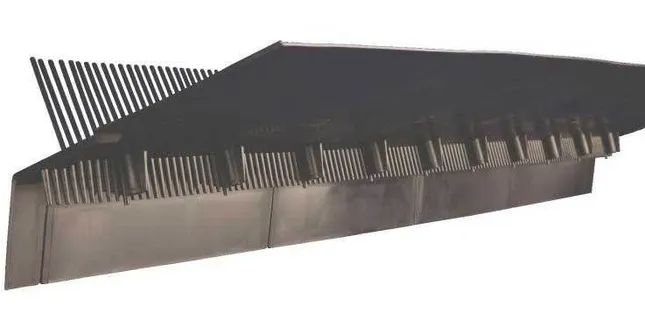
Eave and Fascia Vents Enhancing Roof Ventilation Through Low-Level Airflow
Eave and fascia vents play a vital role in creating cooler, drier, and longer-lasting roof spaces by allowing air to enter at the lowest point of the building envelope. Used either on their own or alongside roof-mounted vents, this approach enhances overall airflow efficiency. Alpine Ventilation’s Australian-designed eave and fascia products are purpose-built to deliver regulatory compliance, durability, and subtle visual integration for modern Australian homes.
Why choose ventilation at the eave and fascia?
Positioning ventilation at the eaves and fascia allows fresh air to enter the roof cavity exactly where heat and moisture tend to accumulate first. This helps circulate air throughout the entire roof space rather than concentrating ventilation only near the ridge. As a result, summer heat buildup is reduced, and winter condensation. Which can lead to mould and dampness—is better controlled.
Because these vents are installed within the eave or fascia overhang. They are naturally shielded from direct rain and strong wind pressures. This reduced exposure lowers the long-term risk of water ingress compared with roof penetrations. When paired with ridge or roof vents, eave and fascia vents create a continuous airflow system. Cool air enters low and warm, moist air exits high, keeping the roof cavity consistently dry and well ventilated.
Advantages over roof-only ventilation systems
Roof-only vents require penetrations through the roof membrane. Which can become vulnerable over time due to flashing deterioration, storm exposure, or installation issues. Eave and fascia vents, on the other hand, are integrated into soffits and cladding systems that are easier to seal and maintain, significantly reducing leak risks.
Low-level air intake also improves condensation management by introducing fresh external air that dilutes moisture-laden air escaping from inside the home. When combined with ridge or roof exhaust vents. Eave and fascia systems distribute airflow more evenly across the roof space, avoiding the hot and cold pockets. Often created by isolated roof vents.
NCC compliance, condensation control and bushfire suitability
Australian building standards increasingly focus on effective condensation management and the proper discharge of exhaust air. Alpine’s eave and fascia vents support NCC 2022 requirements, including Clauses 10.8.2 and 10.8.3. By offering defined free air areas and compliant pathways for roof ventilation, rangehoods, and exhaust fans.
Certain Alpine metal eave and fascia vents are also recognised as compliant up to BAL 40 under AS3959 2009. This makes them suitable for bushfire-prone areas while helping builders meet both safety and performance requirements. By addressing condensation, exhaust termination, and bushfire compliance in one solution, these products simplify specification for Australian projects.
Key features of Alpine eave and fascia vents
Alpine’s eave and fascia range is specifically engineered for Australian housing and suits both general roof ventilation and ducted appliance exhaust. Metal eave and fascia vents (including 400 × 200 mm and 600 × 140 mm sizes) offer generous free airflow. Helping cool roof spaces in summer and reduce moisture and mould during colder months. Fine perforations act as a built-in mesh, preventing insects and pests from entering the roof cavity without restricting airflow.
Powder-coated aluminium and steel construction ensures durability in harsh outdoor conditions, with selected options meeting. BAL 40 bushfire standards and NCC 2022 Clause 10.8.3 requirements. Snap-in plastic and aluminium eave vents provide an economical, discreet option with UV-stabilised materials and removable mesh for easy cleaning. Ducted fascia vent kits are designed specifically for rangehoods and exhaust fans. Supplied with compatible ducting and adapters to streamline installation and assist with NCC 2022 Clause 10.8.2 compliance. All products are designed to integrate seamlessly with standard Australian eaves and fascias. Following effective ventilation upgrades without compromising the home’s appearance.
When to combine eave and fascia vents with roof vents
For many homes, optimal ventilation is achieved by combining eave or fascia vents as intake points with ridge or roof vents as exhaust outlets. This complete airflow loop improves temperature regulation, protects roof structures from moisture damage. Reduces the likelihood of condensation and mould formation.
Alpine’s eave and fascia vents are suitable for both standalone applications and integrated systems that include roof vents or mechanical exhausts. Whether for new builds or retrofit projects. They offer a practical, code-aligned solution that enhances roof ventilation while minimising roof penetrations and long-term leak risk.
When to combine eave/fascia vents with roof vents
In many homes, the best result comes from pairing eave or fascia vents (for intake) with ridge or roof vents (for exhaust) to create a complete airflow circuit. This configuration improves temperature control, protects roof materials from moisture-related damage, and supports healthier indoor conditions by reducing the risk of condensation and mould in the roof space.
Alpine’s eave and fascia vents are engineered to work either as standalone intake points for simple roof-space ventilation or in combination with roof vents and mechanical exhaust systems for higher-performance designs. For new builds and retrofits alike, they offer a practical, code-aligned way to upgrade ventilation at the building perimeter while minimising roof penetrations and leak risk. Alpine Ventilation distributes its products through trusted resellers including Bowens, Dahlsens, Accord Air, Bunnings, and many others. Visit the stockists page to find your nearest supplier.
Disclaimer
The information provided in this article is for general informational and educational purposes only. While Alpine Ventilation’s eave and fascia vents are designed to meet relevant Australian standards and building codes. Including NCC 2022 and AS3959 for bushfire-prone areas, individual project requirements may vary. Readers should consult a licensed builder, architect, or relevant building professional to ensure compliance with local regulations. Site conditions, and specific roof ventilation needs. Alpine Ventilation and the author disclaim any liability for damages, losses, or issues arising from the use or application of the products or information described in this article. Product specifications and availability are subject to change without notice.